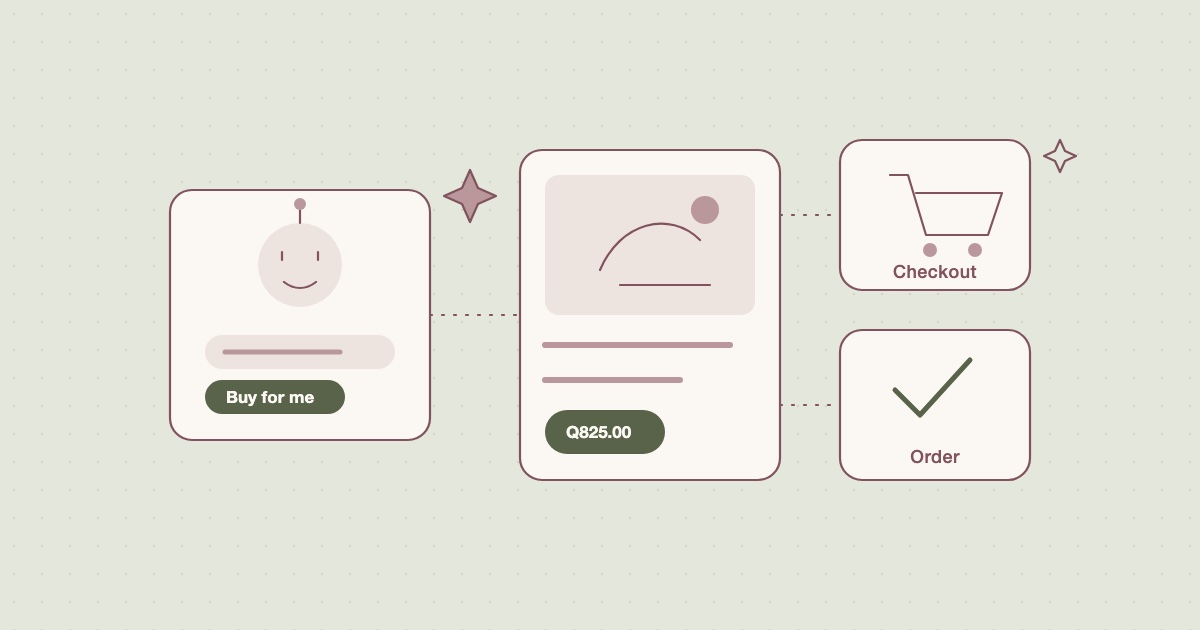
When someone asks ChatGPT, Gemini or Copilot “recommend a sneaker store in Guatemala” or “find someone to integrate my store with HubSpot”, the AI doesn’t see your colours or your homepage animation. It reads your content, your data and your structure, and decides whether to mention you. Your first customer is no longer a person: it’s the agent working for that person.
From SEO to GEO (which is still SEO)
SEO taught us to organise content to appear in a list of links. GEO (Generative Engine Optimization) aims for generative engines to cite you inside their answer. The difference matters: in a list, the user still chooses; in a generated answer, the AI has already chosen and rarely shows more than two or three options.
The good news is that you don’t need to reinvent everything. Google’s official guide puts it plainly: optimizing for AI search “is still SEO”, and its AI features don’t require any special file or markup. What changes is the mindset: writing and structuring so a machine can understand you without guessing.
Agents don’t just read anymore: they buy
The biggest shift is in e-commerce. There are already agents that, with the user’s permission, search for a product, compare it, add it to the cart and complete the purchase.
- On 28 September 2026, Shopify added tools so AI agents running in the buyer’s browser can read and update the checkout and submit the order only after the buyer confirms it.
- In January 2026, Google introduced the Universal Commerce Protocol, an open standard for agentic commerce co-developed with Shopify, Etsy, Wayfair, Target and Walmart, and endorsed by Visa, Mastercard and Stripe, among others.
- In September 2026, Mastercard added identity and fraud-detection services to Agent Pay, its programme for payments made by agents.
- It isn’t all smooth: in September, Amazon blocked Meta’s shopping agent, saying it broke its Conditions of Use, and sites such as eBay and Yelp limit agents they haven’t authorised.
Even OpenAI adjusted course: in March 2026 it prioritised helping ChatGPT users discover products and let each merchant keep its own checkout. The lesson for an online store is clear: if an agent can’t understand your catalogue, prices, availability or shipping policy, it simply buys from someone else.
What an agent needs to choose you
- Clear, complete data. Prices, availability, delivery times, returns and payment methods, visible and consistent across the site.
- Content that answers real questions. Not “we are leaders in solutions”, but “we ship across Guatemala in 24 to 48 hours” or “we accept cards and bank transfers”.
- Well-built structured data. Google says it isn’t required for its AI features, but it still helps your products appear well described in search engines and shopping platforms.
- A fast, technically healthy site. If your page is slow or breaks, the agent moves on.
- A conscious decision about agents. Do you want them to buy from your store? With what controls? Check that your hosting or bot protection isn’t accidentally blocking the agents you do want.
And where do people fit in?
They remain at the centre. The agent buys for someone; trust, the final decision and the relationship are still human. What changes is the path: first you convince the machine with clear data, then the person with experience, design and service. A good website today has two complementary layers: one polished and memorable for humans, and one ordered and precise for agents.
Where to start
- Ask ChatGPT or Gemini about your brand and main service, and check how they describe you.
- Complete your product or service information and fix contradictions.
- Add FAQs with concrete answers.
- Measure your site’s speed and fix what slows it down.
- If you run a store, decide whether to accept purchases from agents, and how.
Sources
- Shopify Developers — WebMCP support for checkout (28 sep 2026)
- TechCrunch — Meta’s AI agent has been blocked from using Amazon.com (21 sep 2026)
- TechCrunch — The next hurdle for AI agents: getting websites to let them in (6 oct 2026)
- Google Search Central — Optimizing your website for generative AI features on Google Search
- Google — Agentic commerce tools and the Universal Commerce Protocol (11 ene 2026)
- OpenAI — Powering product discovery in ChatGPT (24 mar 2026)
- Mastercard — New trust and intelligence services for Agent Pay (30 sep 2026)